In today’s industrial, environmental, and laboratory settings, rapid chemical screening is often the first step in ensuring product quality, process efficiency, and regulatory compliance. While advanced analytical instruments such as ICP-OES, ICP-MS, and spectrophotometers provide highly accurate measurements, there is still a strong need for quick, cost-effective methods that deliver immediate results.
This is where test papers continue to play an important role. They allow users to identify the presence of specific substances within seconds, helping technicians make informed decisions before conducting more detailed analyses.
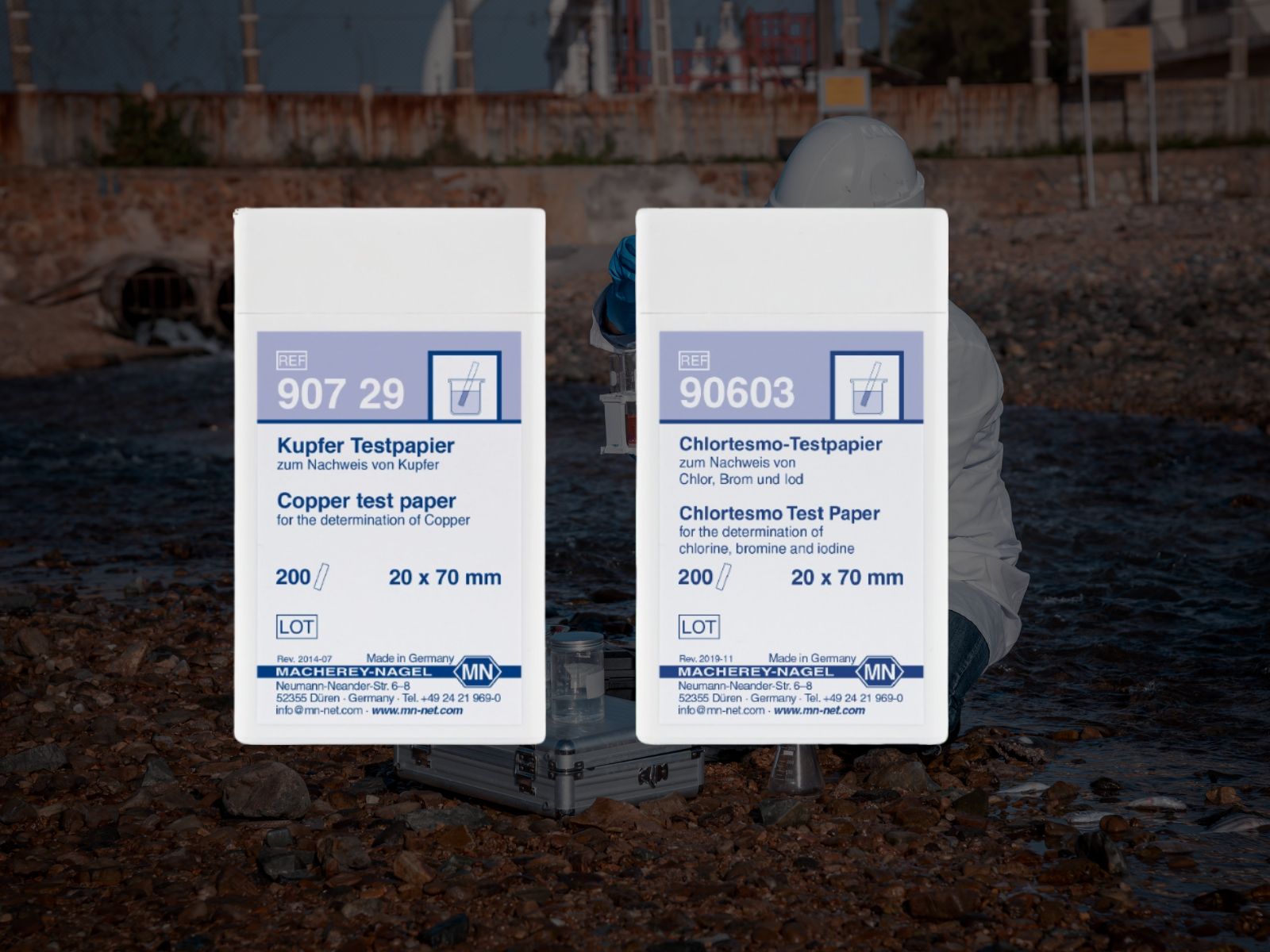
Among the specialised solutions available from Vendart are Copper Test Paper and Chlortesmo Test Paper, two simple yet effective tools designed for rapid chemical detection.
Why Rapid Chemical Detection Matters
Many industries rely on preliminary screening methods to identify potential contamination, verify treatment processes, or monitor chemical conditions.
Rapid testing can help:
- Reduce laboratory workload
- Improve process control
- Identify contamination early
- Support routine quality assurance
- Enable faster corrective actions
- Reduce operational costs
For industries such as water treatment, manufacturing, agriculture, environmental monitoring, and research laboratories, rapid test papers provide an efficient first line of analysis.
Understanding Copper Detection
Copper is an essential trace element but can become problematic when present at elevated concentrations.
Excessive copper levels can lead to:
- Corrosion issues in water systems
- Product contamination
- Environmental concerns
- Regulatory compliance challenges
- Reduced process efficiency
Many industries, therefore, require simple methods for quickly identifying the presence of copper ions before proceeding with quantitative analysis.
Copper Test Paper: Fast and Specific Detection of Cu²⁺
Copper Test Paper provides a rapid method for detecting copper ions (Cu²⁺) in solutions.
Designed for ease of use, the paper produces a visible colour reaction that enables immediate identification of copper contamination.
How Copper Test Paper Works
The testing procedure is straightforward:
- Prepare a neutral or weakly acidic solution (pH 3–7).
- Apply a drop of the test solution to the paper.
- Observe the colour reaction.
When Cu²⁺ ions are present, a green spot develops on the paper.
In samples containing very small quantities of copper, a characteristic green ring may appear instead.
This visual response allows users to quickly determine whether copper is present without requiring specialised instrumentation.
Applications of Copper Test Paper
Water Quality Monitoring
Copper can enter water systems through pipe corrosion, industrial discharge, or mining activities. Rapid screening helps identify potential contamination before more detailed laboratory testing.
Industrial Process Control
Manufacturers often monitor copper levels during production processes involving metal finishing, electroplating, or chemical processing.
Laboratory Screening
Research and quality control laboratories use copper test papers for preliminary investigations and sample verification.
Educational Applications
The simplicity of the colour reaction makes copper test paper useful for demonstrating analytical chemistry principles in educational settings.
When Higher Sensitivity Is Required
Certain applications require detecting extremely small traces of copper on surfaces or materials.
Examples include:
- Metal coating inspection
- Detection of pores in metallic coatings
- Forensic investigations involving projectiles
- Agricultural residue testing
- Surface contamination studies
For these specialised applications, highly sensitive copper detection papers can provide enhanced performance when trace-level detection is necessary.
Detecting Free Halogens with Chlortesmo Test Paper
Halogens such as chlorine, bromine, and iodine are widely used in industrial and environmental applications.
They play critical roles in:
- Water disinfection
- Sanitation programs
- Food processing
- Chemical manufacturing
- Pharmaceutical production
- Environmental treatment systems
Because free halogens are highly reactive, rapid monitoring is essential for maintaining effective process control.
What Is Chlortesmo Test Paper?
Chlortesmo Test Paper is designed for the quick detection of free halogens, including:
- Free chlorine
- Bromine
- Iodine
The test provides a fast visual indication of the presence of these oxidising agents, enabling immediate assessment of treatment effectiveness or chemical conditions.
Why Monitoring Free Halogens Is Important
Water Treatment Operations
Chlorine remains one of the most widely used disinfectants globally. Maintaining appropriate chlorine levels is critical for ensuring microbial control while avoiding excessive chemical dosing.
Industrial Sanitation
Food processing facilities and manufacturing plants often rely on halogen-based disinfectants to maintain hygienic production environments.
Environmental Monitoring
Monitoring residual halogens helps assess the effectiveness of treatment systems and environmental discharge controls.
Chemical Production
Many industrial processes require precise management of halogen concentrations to maintain product quality and process efficiency.
Important Considerations During Testing
While Chlortesmo Test Paper is highly effective for detecting free halogens, users should be aware of potential interferences.
Free nitrous acid (HNO₂) can interfere with the test reaction. However, this interference can be eliminated through the addition of amidosulphuric acid prior to testing.
Understanding potential interferences helps ensure reliable and accurate results.
Advantages of Test Papers Over Instrument-Based Screening
Although modern analytical instruments offer exceptional sensitivity, test papers continue to provide several practical benefits.
Immediate Results
Most tests can be completed within seconds.
Portability
No power supply or instrumentation is required.
Cost-Effectiveness
Routine screening can be performed without expensive equipment or maintenance costs.
Ease of Use
Minimal training is required, making them suitable for field and laboratory applications.
Rapid Decision-Making
Operators can quickly determine whether further quantitative analysis is necessary.
Storage Best Practices
To maintain accuracy and reliability, test papers should be stored properly.
Recommended storage conditions include:
- Cool and dry environments
- Protection from direct sunlight
- Protection from moisture
- Sealed packaging when not in use
Proper storage helps preserve reagent stability and ensures consistent performance throughout the product’s shelf life.
Conclusion
Rapid screening remains a critical component of modern analytical workflows. Copper Test Paper and Chlortesmo Test Paper from Vendart offer practical solutions for quickly identifying copper ions and free halogens without the need for complex instrumentation.
Whether monitoring water quality, supporting industrial process control, verifying sanitation procedures, or conducting environmental assessments, these test papers provide fast, reliable results that help organisations make informed decisions and maintain high standards of quality and safety.
Frequently Asked Questions
1. What does Copper Test Paper detect?
Copper Test Paper is specifically designed to detect copper ions (Cu²⁺) in neutral or weakly acidic solutions.
2. What colour change indicates the presence of copper?
The presence of copper ions produces a green spot. Very small quantities may produce a green ring.
3. What pH range is suitable for Copper Test Paper?
The test solution should typically have a pH between 3 and 7 for optimal performance.
4. What does Chlortesmo Test Paper detect?
Chlortesmo Test Paper detects free halogens, including chlorine, bromine, and iodine.
5. Where is Chlortesmo Test Paper commonly used?
It is widely used in water treatment, sanitation programs, industrial process monitoring, environmental testing, and chemical manufacturing.
6. Can anything interfere with Chlortesmo Test Paper results?
Yes. Free nitrous acid (HNO₂) can interfere with the test. This interference can be removed by adding amidosulphuric acid before testing.
7. How should test papers be stored?
Store test papers in a cool, dry place away from sunlight and moisture to maintain performance and shelf life.
8. Why use test papers instead of laboratory instruments?
Test papers provide immediate results, require no equipment, are highly portable, and offer a cost-effective solution for routine screening and preliminary analysis.
For Further Enquiry Contact: sales@vendart.com.au