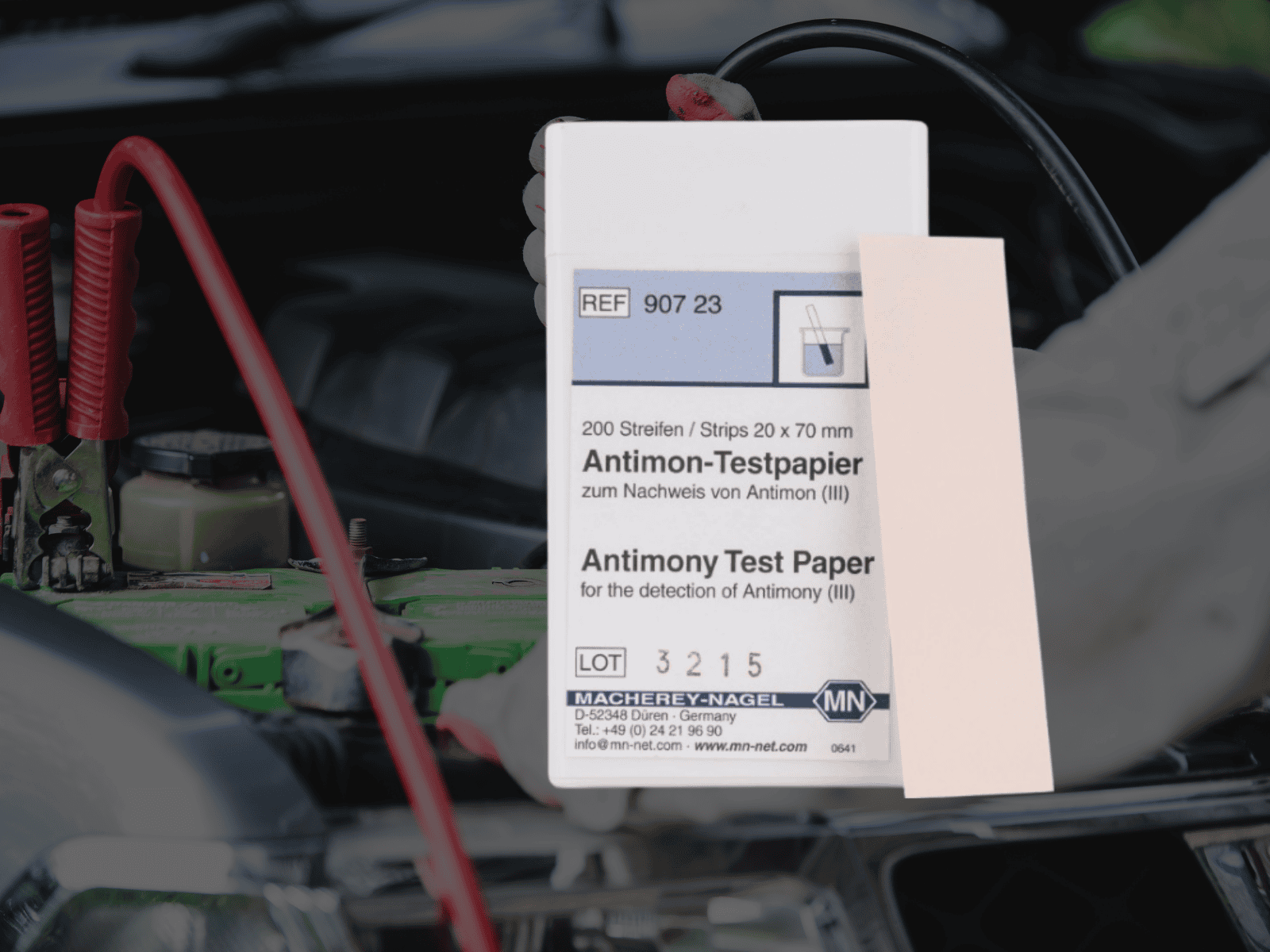
Antimony is an important industrial element used across manufacturing, materials science, and chemical processing. From flame-retardant systems and lead alloys to specialist glass production, antimony compounds play a valuable role in modern manufacturing.
However, when antimony needs to be identified during laboratory or industrial testing, rapid screening can provide an important first step. Antimony Test Paper from Vendart offers a simple, convenient method for detecting trivalent antimony ions (Sb³⁺), helping users quickly determine whether antimony is present in a sample.
Why Is Antimony Detection Important?
Antimony is used in a wide range of applications because of its useful chemical and physical properties.
Some important applications include:
- Flame retardants: Antimony compounds are commonly used as synergists in flame-retardant systems.
- Lead alloys: Antimony can improve the hardness and durability of lead-based alloys used in applications such as batteries and solder.
- Glass manufacturing: Antimony compounds are used in specialist glass production, including certain high-quality display and optical glass applications.
- Industrial materials: Antimony-containing compounds are used in various chemical and materials-processing applications.
Where antimony-containing materials or process streams are involved, rapid screening can help laboratories and quality-control teams identify potential contamination or confirm the presence of antimony before more detailed analysis.
What Is Antimony Test Paper?
Antimony Test Paper is a test strip and paper-based qualitative screening method designed for the rapid detection of trivalent antimony ions (Sb³⁺).
The test paper is yellow before testing. When antimony is present, orange-red spots appear on the paper, providing a clear visual indication.
This makes the test particularly useful when a quick preliminary result is needed without relying on complex analytical instrumentation.
Understanding Sb³⁺ and Sb⁵⁺
One important consideration when using Antimony Test Paper is the oxidation state of antimony.
The test is specifically designed to detect trivalent antimony (Sb³⁺). Pentavalent antimony (Sb⁵⁺) does not produce the same direct response.
If pentavalent antimony is present, it must first be reduced to trivalent antimony using metallic magnesium before testing.
This distinction is important because antimony can exist in different oxidation states depending on the chemical environment and sample composition.
How Does the Test Work?
The testing process is based on a visible colour reaction.
When the prepared sample containing Sb³⁺ is applied to the yellow test paper, the presence of antimony produces orange-red spots.
This allows users to perform a rapid qualitative assessment and determine whether further analytical investigation is necessary.
For applications requiring precise concentration measurements, instrumental techniques such as atomic absorption spectroscopy or ICP-based analysis may be appropriate as confirmatory methods.
Sensitivity and Test Capacity
Antimony Test Paper is designed for practical routine screening and offers:
- Detection target: Sb³⁺ ions
- Sensitivity: 5 mg/L Sb³⁺
- Number of tests: 200
- Format: Test strips and papers
The 200-test capacity makes the product suitable for laboratories and industrial users conducting repeated screening.
Where Can Antimony Test Paper Be Used?
Industrial Quality Control
Manufacturers handling antimony-containing materials can use rapid screening as part of routine process checks.
Materials and Manufacturing
Industries working with flame-retardant formulations, alloys, and specialist glass can benefit from quick preliminary testing.
Laboratory Screening
Laboratories can use the test paper to screen samples before undertaking more detailed quantitative analysis.
Educational and Research Applications
The visible orange-red colour reaction also provides a straightforward way to demonstrate qualitative chemical analysis.
Storage and Handling
Correct storage is important for maintaining reliable test performance.
Store Antimony Test Paper:
- In a cool, dry location
- Away from direct sunlight
- Protected from moisture
- In its original packaging when not in use
Following appropriate storage practices helps maintain the stability of the reactive components.
Conclusion
Rapid chemical screening can help laboratories and industrial facilities make faster decisions about their samples and processes. Antimony Test Paper from Vendart provides a convenient qualitative method for detecting trivalent antimony ions (Sb³⁺), with a sensitivity of 5 mg/L and 200 tests per pack.
Its straightforward colour reaction, compact format, and ease of use make it a practical screening tool for industrial quality control, materials testing, and laboratory applications.
For samples containing pentavalent antimony, users should remember that Sb⁵⁺ must first be reduced to Sb³⁺ before testing. Where quantitative concentration data are required, instrumental analysis should be used as the appropriate confirmatory approach.
FAQs
- What does Antimony Test Paper detect?
It is designed specifically for the rapid qualitative detection of trivalent antimony ions (Sb³⁺).
- What colour indicates the presence of antimony?
When Sb³⁺ is present, orange-red spots appear on the yellow test paper.
- Can the test paper detect pentavalent antimony (Sb⁵⁺)?
Not directly. Pentavalent antimony must first be reduced to trivalent antimony using metallic magnesium before testing.
- What is the sensitivity of Antimony Test Paper?
The stated sensitivity is 5 mg/L Sb³⁺.
- How many tests are included?
The product provides 200 tests.
- Can Antimony Test Paper provide an exact antimony concentration?
No. It is a qualitative screening method. Quantitative determination should be performed using an appropriate instrumental analytical technique.
- How should Antimony Test Paper be stored?
Store it in a cool, dry place, protected from sunlight and moisture to help maintain its performance.
- What industries use antimony?
Antimony is used in applications including flame-retardant systems, lead alloys, batteries, solder, roofing materials, and specialist glass manufacturing.
For Further Enquiry Contact: sales@vendart.com.au