Australia’s dairy industry has built its reputation on producing safe, high-quality milk that meets stringent domestic and international standards. Maintaining that reputation requires rigorous dairy testing, particularly for antibiotic residues that can compromise food safety, disrupt dairy processing, and lead to costly product rejections.
While traditional laboratory testing remains essential for confirmation and regulatory compliance, today’s dairy operations increasingly need rapid, on-site solutions that provide immediate answers. Early detection allows producers, transport operators, and processing plants to make informed decisions before contaminated milk enters the supply chain.
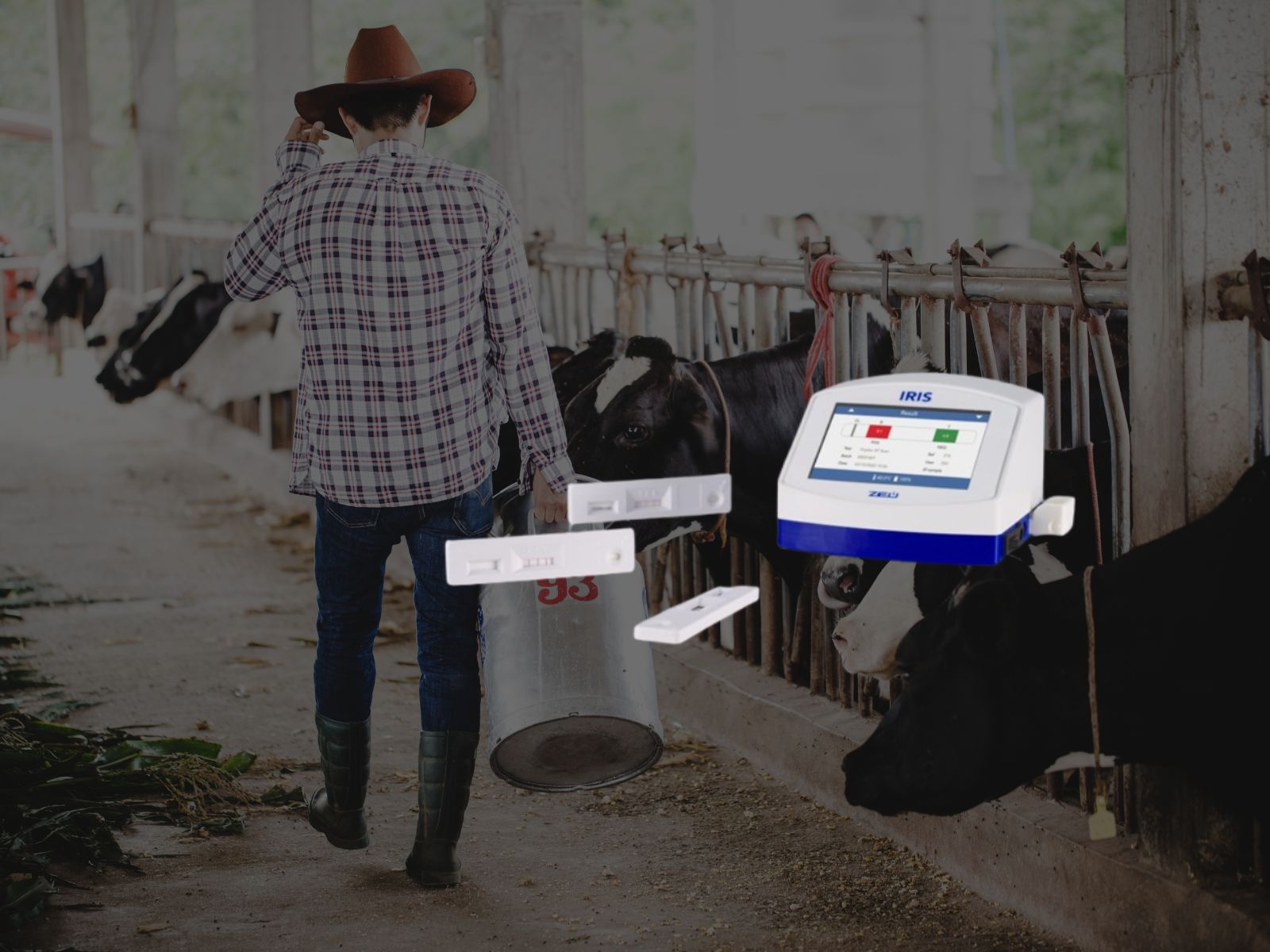
Triplex BTS Scan & IRIS, available from Vendart, combines rapid immunochromatographic testing with automated digital result interpretation, helping streamline dairy contamination testing, dairy safety testing, and dairy quality assurance testing across the entire milk collection process.
Why Antibiotic Residue Testing Is Critical
Antibiotics play an important role in maintaining animal health, but milk from treated animals must not enter the food supply until the appropriate withholding period has elapsed.
Residues of antibiotics such as beta-lactams, tetracyclines, and sulfamides can cause several issues:
- Failure to comply with Maximum Residue Limits (MRLs)
- Inhibition of starter cultures used in cheese and yoghurt production
- Product recalls and financial losses
- Rejection of milk shipments
- Reduced consumer confidence
- Regulatory penalties
Routine screening is therefore an essential component of every dairy quality management program.
The Need for Faster Dairy Testing
Many dairy businesses still rely on central laboratory testing, which is highly accurate but may require additional transport and processing time before results are available.
For farms, transport operators, and milk reception facilities, delays can mean:
- Contaminated milk mixing with compliant batches
- Production interruptions
- Increased disposal costs
- Delayed operational decisions
Rapid screening technologies allow testing to occur at the point of collection or reception, significantly reducing these risks.
Introducing Triplex BTS Scan & IRIS
Triplex BTS Scan is a rapid one-step competitive immunochromatographic assay designed for the qualitative detection of three major antibiotic groups in milk:
- Beta-lactams
- Tetracyclines
- Sulfamides
When paired with the IRIS reader, the testing process becomes even more efficient by automatically interpreting results and sharing them digitally in real time.
Instead of relying solely on visual interpretation, operators receive objective results that can be transmitted directly to mobile devices, servers, or cloud-based systems.
How the System Works
The testing procedure has been designed for speed and simplicity.
- Add one drop of milk to the test cassette.
- Insert the cassette into the IRIS reader.
- The assay automatically runs for approximately six minutes.
- Results are interpreted automatically.
- Data is transmitted via Wi-Fi, Bluetooth, or 4G to authorised users.
This automated workflow reduces operator variability while ensuring rapid access to actionable information.
Detecting Three Major Antibiotic Groups
One of the key advantages of Triplex BTS Scan is its ability to detect three commonly monitored antibiotic families in a single assay.
Beta-Lactams
Widely used in dairy cattle, beta-lactam residues are among the most frequently screened antibiotics because of their impact on food safety and dairy processing.
Tetracyclines
These broad-spectrum antibiotics are commonly used in veterinary medicine and require routine monitoring to ensure compliance with residue regulations.
Sulfamides
Sulfamide residues can also affect milk quality and regulatory compliance, making their inclusion in routine screening programs highly valuable.
Testing all three groups simultaneously improves efficiency and reduces the need for multiple individual assays.
Supporting Dairy Quality Across the Supply Chain
Triplex BTS Scan & IRIS is suitable for multiple stages of milk collection and processing.
On the Farm
Farm operators can test milk before collection to ensure contaminated milk does not leave the property.
This proactive approach helps reduce the risk of processor penalties and protects milk quality.
During Transport
Milk collection vehicles can perform testing while transporting milk, providing early warning if contamination is detected.
At Milk Reception
Processing plants can screen incoming milk before unloading, helping prevent contamination of storage tanks and production systems.
Quality Assurance Laboratories
Laboratories can use rapid screening to prioritise samples requiring further confirmatory analysis.
The Advantages of Automated Interpretation
Visual interpretation of rapid tests can sometimes vary between operators, particularly when faint test lines are present.
The IRIS reader eliminates this variability by providing:
- Objective interpretation
- Standardised results
- Automatic digital records
- Real-time reporting
- Complete traceability
These features support stronger quality management systems while simplifying documentation for audits and compliance programs.
Designed for Modern Dairy Operations
Triplex BTS Scan has been developed to meet the practical needs of today’s dairy industry.
Key features include:
- One-step assay
- Approximately six-minute test time
- Detection of beta-lactams, tetracyclines, and sulfamides
- Visual or automated interpretation
- Wireless data transmission via Wi-Fi, Bluetooth, or 4G
- Available in packs of 25 or 100 test cassettes
The combination of speed, simplicity, and digital connectivity makes the system suitable for both small dairy farms and large processing facilities.
Conclusion
As dairy supply chains continue to prioritise food safety, efficiency, and traceability, rapid antibiotic screening has become an essential part of modern quality assurance programs.
Triplex BTS Scan & IRIS enables producers, transport operators, and processors to detect beta-lactams, tetracyclines, and sulfamides in milk within minutes while automatically interpreting and sharing results. By supporting faster decision-making and reducing the risk of contaminated milk entering the production chain, the system strengthens dairy testing, dairy contamination testing, dairy safety testing, and dairy quality assurance testing across every stage of milk handling.
For Australian dairy businesses seeking reliable, connected, and easy-to-use antibiotic residue screening, Vendart offers solutions such as Triplex BTS Scan & IRIS, providing an efficient approach to protecting product quality, regulatory compliance, and consumer confidence.
FAQs
1. What is Triplex BTS Scan?
Triplex BTS Scan is a rapid immunochromatographic test for the qualitative detection of beta-lactams, tetracyclines, and sulfamides in milk.
2. What does the IRIS reader do?
The IRIS reader automatically interprets test results and transmits them to mobile devices, servers, or cloud platforms using Wi-Fi, Bluetooth, or 4G connectivity.
3. How long does the test take?
The complete assay takes approximately six minutes, allowing rapid decisions during milk collection and processing.
4. Which antibiotics can Triplex BTS Scan detect?
The test screens for three major antibiotic groups: beta-lactams, tetracyclines, and sulfamides.
5. Where can the system be used?
Triplex BTS Scan & IRIS can be used on dairy farms, milk collection trucks, milk reception areas at processing plants, and quality assurance laboratories.
6. Why is rapid dairy contamination testing important?
Rapid testing identifies contaminated milk before it enters bulk storage or production, helping reduce financial losses, protect product quality, and support regulatory compliance.
7. Is the test suitable for dairy quality assurance programs?
Yes. The system provides objective, traceable, and digitally recorded results, making it an excellent addition to dairy quality assurance and food safety programs.
8. What packaging options are available?
Triplex BTS Scan is available in 25-test and 100-test cassette formats, allowing flexibility for operations of different sizes.
For Further Enquiry Contact: sales@vendart.com.au