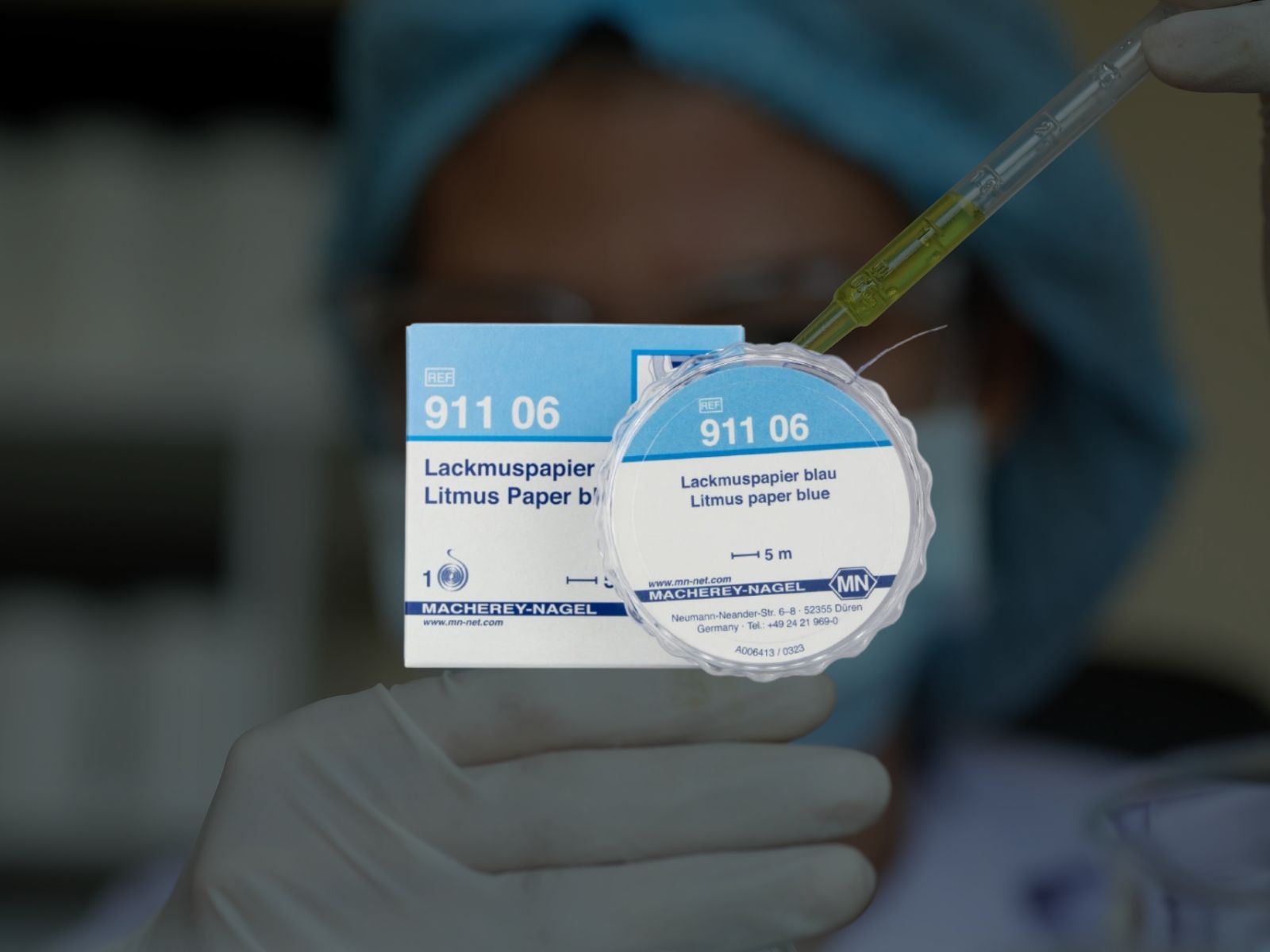
From school laboratories to industrial quality control facilities, Litmus Paper remains one of the most recognised and widely used tools for determining whether a solution is acidic or alkaline. Despite advances in digital pH meters and analytical instruments, litmus paper strips continue to offer a quick, convenient, and cost-effective method for routine acid-base testing.
Available from Vendart, Litmus Paper is designed for simple pH screening without the need for specialised equipment. Whether you’re performing neutralisation reactions, laboratory experiments, or routine process checks, litmus paper provides immediate visual results that help streamline everyday testing.
What Is Litmus Paper?
Litmus Paper is an indicator paper that changes colour when exposed to acidic or alkaline solutions. Unlike universal pH papers that estimate numerical pH values, litmus paper simply indicates whether a solution is acidic or basic by changing colour at its transition point.
Because it does not require a colour scale for interpretation, litmus strips are particularly useful for rapid yes-or-no acid/base determination.
The paper is completely impregnated with litmus indicator, ensuring consistent and reliable colour changes during testing.
The Science Behind Litmus
Litmus is one of the oldest known chemical indicators. Rather than being a single chemical compound, it is a naturally occurring mixture of dyes extracted from certain species of lichens.
For centuries, litmus has been used to distinguish acids from alkalis, making it one of the most enduring tools in analytical chemistry.
Its simple chemistry, reliability, and ease of use explain why it continues to be found in laboratories around the world.
How Litmus Paper Works
Using litmus paper pH test strips is straightforward:
- Place a drop of the test solution onto the paper or briefly dip the strip into the sample.
- Observe the colour change immediately.
- Determine whether the solution is acidic or alkaline based on the colour response.
Because the reaction occurs almost instantly, litmus paper is ideal for quick screening before more detailed analysis is carried out.
Common Applications of Litmus Paper
Laboratory Testing
Litmus paper is widely used for routine acid-base identification during chemical experiments and sample preparation.
Neutralisation Reactions
One of its most common applications is monitoring neutralisation processes. It allows users to quickly verify whether a solution has changed from acidic to alkaline, or vice versa.
Education
Because of its simplicity, litmus paper is a staple in schools, universities, and training laboratories for teaching acid-base chemistry.
Industrial Process Monitoring
Manufacturers use litmus paper strips for rapid process checks where a simple acid-or-base determination is sufficient.
Water and Chemical Screening
Litmus paper can also be used for preliminary screening of water samples, cleaning solutions, and chemical mixtures before more precise pH measurements are performed.
Why Choose Litmus Paper?
Although digital pH meters provide numerical readings, litmus paper remains popular because of its practical advantages.
Some of the key benefits include:
- Fast and immediate results
- No batteries or calibration required
- Easy to use
- Cost-effective for routine testing
- Portable and convenient
- Ideal for rapid acid/base determination
These advantages make litmus paper pH test strips suitable for laboratories, educational institutions, manufacturing facilities, and field applications.
Proper Storage for Reliable Performance
To maintain consistent colour performance, Litmus Paper should be stored correctly.
For best results:
- Keep in a cool, dry place.
- Avoid direct sunlight.
- Protect from moisture and humidity.
- Store in its original container when not in use.
Proper storage helps preserve the indicator dye and ensures reliable performance throughout the product’s shelf life.
Conclusion
Even in today’s technology-driven laboratories, Litmus Paper remains an essential tool for fast, reliable acid-base determination. Its simple operation, instant colour change, and long history of dependable performance make it an excellent choice for routine testing across education, research, industry, and quality control.
Whether you need litmus strips for neutralisation reactions, laboratory screening, or everyday chemical testing, Vendart offers high-quality litmus paper strips that provide a practical and efficient solution for rapid acid-base identification.
FAQs
1. What is Litmus Paper used for?
Litmus Paper is used to quickly determine whether a solution is acidic or alkaline without measuring its exact pH value.
2. Can litmus paper measure an exact pH value?
No. Litmus paper pH test strips indicate whether a solution is acidic or alkaline but do not provide a numerical pH reading.
3. Where is Litmus Paper commonly used?
Litmus Paper is widely used in laboratories, schools, universities, industrial quality control, chemical manufacturing, and research facilities.
4. Why is litmus extracted from lichens?
Litmus is a natural mixture of indicator dyes obtained from certain lichen species and has been used in chemistry for centuries due to its reliable acid-base colour changes.
5. How should Litmus Paper be stored?
Store it in a cool, dry place away from sunlight and moisture to maintain its effectiveness and shelf life.
For Further Enquiry Contact: sales@vendart.com.au