The dairy industry operates under some of the strictest food safety requirements in the world. One of the most critical quality control measures is the detection of antibiotic residues in milk before it enters the food supply chain.
Antibiotics are widely used in livestock management to treat bacterial infections and maintain animal health. However, milk containing antibiotic residues can pose significant challenges for dairy processors, consumers, and regulators. Even small traces may interfere with dairy fermentation processes, affect product quality, and lead to costly product rejections.
As food safety regulations continue to evolve, dairy producers, laboratories, milk collection centres, and processors are increasingly seeking faster, more reliable, and standardised testing methods. This is where the Zeulab COMET8, available through Vendart, offers a powerful solution.
Why Antibiotic Residue Testing Matters
Milk is one of the most heavily monitored food products globally. Regulatory authorities establish Maximum Residue Limits (MRLs) for veterinary drugs to ensure consumer safety and protect dairy product quality.
Failure to detect antibiotic contamination can result in:
- Rejection of milk shipments
- Production losses
- Disruption of cheese and yoghurt manufacturing
- Regulatory non-compliance
- Damage to brand reputation
- Financial penalties
Routine screening therefore plays a vital role in modern dairy quality assurance programs.
The Challenges of Traditional Microbial Testing
Microbial inhibition assays remain one of the most widely used methods for antibiotic residue screening. While highly effective, traditional tests often present operational challenges.
Many dairy facilities encounter issues such as:
Subjective Colour Interpretation
Different operators may interpret colour changes differently, leading to inconsistent results.
Training Requirements
Accurately interpreting microbial assay results often requires experience and specialised training.
Timing Sensitivity
Microbial tests must be stopped at the correct point of bacterial growth inhibition. Delays can affect the quality and confidence.
Limited Traceability
Manual record-keeping increases the risk of data inconsistencies and makes auditing more difficult.
For facilities handling large sample volumes, these challenges can significantly impact productivity and standardisation.
What Is Zeulab COMET8?
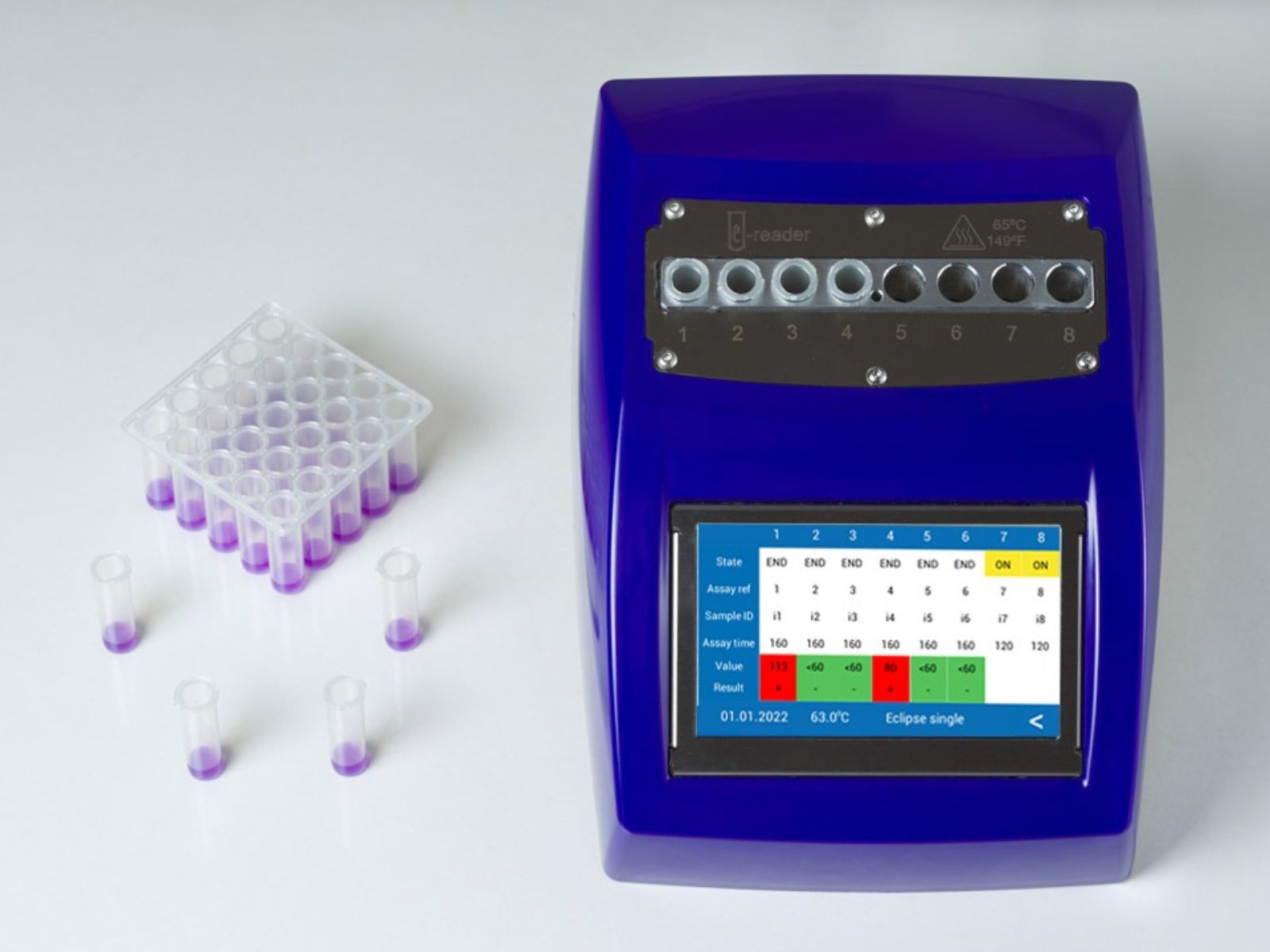
COMET8 is an automated incubation, monitoring, and interpretation system designed to simplify antibiotic residue screening.
The system works in combination with Eclipse Farm 3G and Explorer 2.0 microbial assays to automate key stages of the testing process.
Rather than relying on subjective visual interpretation, COMET8 continuously monitors colour development and provides objective, standardised results.
The technology supports the screening of more than 50 antibiotic residues across multiple matrices, including:
- Raw milk
- Heat-treated milk
- Meat
- Eggs
- Kidneys
- Animal feed
This versatility makes COMET8 a valuable tool for food safety laboratories, dairy farms, milk collection centres, and processing facilities.
How COMET8 Works
The system combines incubation, monitoring, interpretation, and data storage into a single workflow.
Automated Incubation
COMET8 incubates microbial assays under controlled conditions, ensuring consistency between tests.
Real-Time Colour Monitoring
During the assay, the system continuously tracks colour changes as bacterial growth occurs.
Automatic End-Point Detection
One of the biggest advantages of COMET8 is its ability to stop the assay automatically at the optimal growth inhibition point.
This eliminates uncertainty associated with manual timing and improves test reliability.
Objective Result Interpretation
Instead of relying on visual judgement, COMET8 interprets assay colours digitally and assigns numerical values to results.
This reduces operator variability and improves reproducibility.
Complete Traceability
Results are displayed on the touchscreen interface and stored electronically, creating a traceable record for audits and quality management systems.
Benefits for Australian Dairy Operations
Increased Consistency
Automated interpretation ensures that every test is evaluated using the same criteria, regardless of who operates the system.
Reduced Training Requirements
New staff can perform testing with greater confidence because the system automates interpretation and decision-making.
Improved Productivity
Automated monitoring allows operators to focus on other tasks while assays are running.
Enhanced Data Integrity
Electronic result storage supports traceability requirements and simplifies compliance reporting.
Faster Decision-Making
Real-time monitoring enables quality teams to act immediately when antibiotic residues are detected.
Applications Across the Dairy Supply Chain
The flexibility of COMET8 makes it suitable for multiple testing environments.
Dairy Farms
Screen milk before collection and identify potential contamination issues early.
Milk Collection Trucks
Verify milk quality during transport and reduce the risk of contaminated batches entering the processing chain.
Processing Plants
Support incoming milk screening and quality assurance programs.
Food Testing Laboratories
Improve throughput while maintaining consistent analytical performance.
Compact Design, Powerful Performance
COMET8 is designed for practical deployment in laboratory and field environments.
Key specifications include:
| Feature |
Specification |
| Capacity |
8 samples simultaneously |
| Display |
Touchscreen colour display |
| Connectivity |
USB |
| Size |
17 × 7.5 × 23 cm |
| Weight |
0.97 kg |
| Temperature Control |
65°C ±1°C
63°C ±1°C |
| Key Benefit |
Compact design for easy laboratory integration |
Its compact size allows easy integration into existing dairy testing workflows without requiring extensive laboratory space.
The Future of Dairy Testing
As dairy supply chains become increasingly data-driven, automation is transforming how quality assurance programs operate.
The shift toward objective and traceable testing aligns with industry demands for greater efficiency, standardisation, and regulatory compliance. Automated systems such as COMET8 help dairy businesses reduce human error while improving confidence in analytical results.
For Australian dairy producers and testing laboratories, adopting advanced screening technologies can strengthen food safety programs and support long-term operational excellence.
Conclusion
Antibiotic residue monitoring remains a critical component of dairy quality management. Traditional microbial assays provide reliable screening, but manual interpretation can introduce variability and inefficiencies.
COMET8 from Vendart addresses these challenges through automated incubation, real-time monitoring, objective interpretation of results, and complete traceability. By simplifying the screening of more than 50 antibiotic residues, COMET8 helps dairy operations improve consistency, productivity, and compliance.
For organisations seeking a reliable Dairy Testing Kit Australia solution, COMET8 represents a significant advancement in modern antibiotic residue screening technology.
Frequently Asked Questions
1. What is Zeulab COMET8?
COMET8 is an automated system that incubates, monitors, interprets, and stores results from microbial assays used to detect antibiotic residues in food products.
2. How many antibiotics can COMET8 detect?
When used with Eclipse Farm 3G and Explorer 2.0 assays, COMET8 can support screening for more than 50 antibiotic residues.
3. Which sample types can be tested?
The system can be used for raw milk, heat-treated milk, meat, eggs, kidneys, and animal feed.
4. Why is automated interpretation important?
Automated interpretation eliminates operator subjectivity, improves consistency, and provides standardised results across multiple users and locations.
5. Can COMET8 store testing records?
Yes. Results are displayed digitally and stored electronically to support traceability and quality management requirements.
6. Is COMET8 suitable for dairy farms and processing plants?
Yes. COMET8 is designed for use across farms, milk collection trucks, processing facilities, and food testing laboratories.
7. How many samples can COMET8 process at once?
The system can process up to eight samples simultaneously.
8. Why is antibiotic residue testing important in milk?
Testing helps ensure regulatory compliance, protects consumers, prevents processing issues, and maintains the quality and safety of dairy products.
For Further Enquiry Contact: sales@vendart.com.au