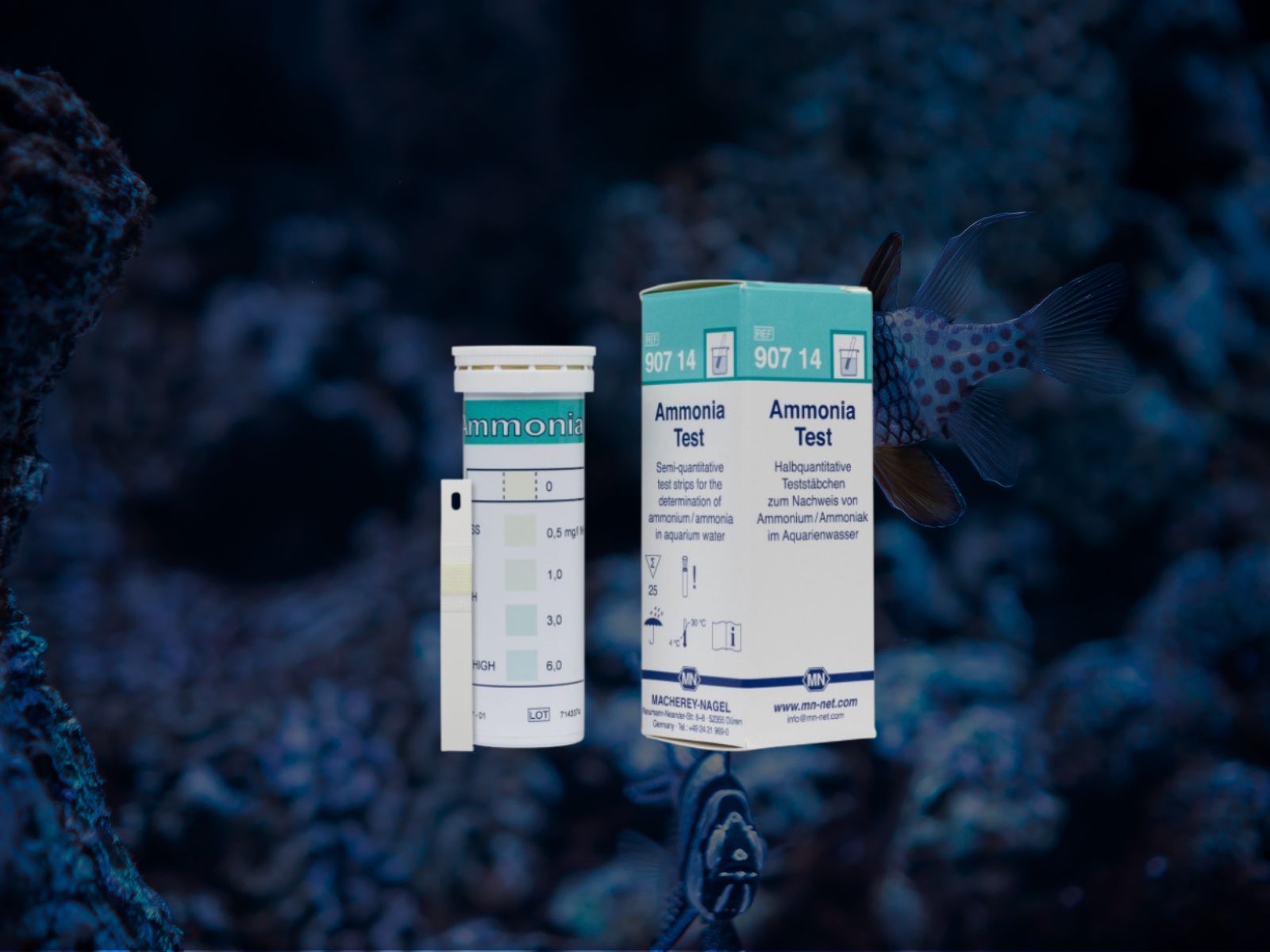
Ammonia is one of the most critical parameters in water quality monitoring. Whether in aquariums, aquaculture systems, laboratory water, or environmental testing, even small concentrations of ammonia can have serious biological consequences. Fast detection is therefore essential — not just for compliance, but for protecting aquatic life and maintaining stable systems.
Ammonia Test Strips provide a simple, rapid, and reliable method for determining ammonium (NH₄⁺) and ammonia levels in water, delivering actionable results within seconds and without the need for laboratory equipment.
Why Ammonia Monitoring Matters
In aquatic systems, ammonia originates primarily from the biological decomposition of organic matter, including:
- Fish waste
- Uneaten food
- Decaying plant material
In water, ammonia exists in two forms:
- Ionised ammonium (NH₄⁺)
- Un-ionised ammonia (NH₃)
The proportion of each depends on pH and temperature. As pH and temperature increase, ammonium shifts toward ammonia (NH₃), which is far more toxic to aquatic organisms.
Scientific studies consistently show that ammonia toxicity begins at very low concentrations:
- ≥ 0.5 mg/L ammonium: Early stress symptoms in fish, including rapid gill movement, erratic swimming, and reduced feeding
- ≥ 1.0 mg/L ammonium: High risk of acute toxicity, potentially lethal with prolonged exposure
Because ammonia can rise quickly between maintenance cycles, frequent, on-site testing is essential — especially in closed or recirculating systems.
Ammonia Test Strips: Key Technical Specifications
Vendart’s Ammonia Test Strips are designed for routine monitoring where speed and ease of use are critical.
Product Overview
- Parameter measured: Ammonium/ammonia
- Measurement range:
0 ∙ 0.5 ∙ 1 ∙ 3 ∙ 6 mg/L NH₄⁺
- Test format: Test strips & papers
- Number of tests: 25 per pack
- Time to result: ~30 seconds
- Equipment required: None
This range is specifically suited to detecting early-stage contamination as well as identifying dangerously elevated ammonia levels before irreversible damage occurs.
Advantages of Test Strip-Based Ammonia Testing
1. Speed at the point of need
Results are available in under a minute, enabling immediate corrective action such as water changes, filtration adjustments, or feeding control.
2. Simple, operator-friendly method
No reagents, calibration, or specialised training is required. This makes ammonia test strips suitable for aquariums, aquaculture facilities, educational labs, and field testing.
3. Reliable trend monitoring
While laboratory methods offer lower detection limits, test strips excel at trend analysis and routine screening, helping users identify rising ammonia levels before they become critical.
Typical Applications
Aquarium and Ornamental Fish Systems
Ammonia Test Strips are ideal for freshwater and marine aquariums, supporting regular monitoring to protect fish health and prevent stress-related disease.
Aquaculture and Hatcheries
In high-density systems, ammonia can accumulate rapidly. Frequent testing helps maintain optimal water conditions and supports stock survival and growth performance.
Environmental and Water Testing
Ammonia monitoring is commonly required in surface water, wastewater, and effluent discharge checks, where elevated ammonia can indicate pollution or biological imbalance.
Education and Training
The clear colour scale and rapid response make these strips well-suited for teaching basic water chemistry and nitrogen cycling.
Directions for Use (Best Practice)
- Dip the ammonia test strip into the water sample, moving it back and forth for 5 seconds.
- Do not shake off excess water.
- Hold the strip horizontally with the test pads facing upward.
- Wait 15–30 seconds for colour development.
- Compare the test pad with the provided colour scale to determine the ammonia concentration.
For consistent results, test samples at a similar temperature and lighting condition, and store strips in a cool, dry place with the container tightly closed.
Test Strips vs Instrumental Methods
Rapid screening
On-site decision making
Routine monitoring
- Laboratory methods (e.g. spectrophotometry, ion-selective electrodes):
Higher analytical precision
Regulatory reporting and confirmation
Best practice is to use test strips for frequent checks and early detection, and laboratory analysis when detailed reporting or trace-level accuracy is required.
A Practical Tool for Protecting Aquatic Life
Ammonia remains one of the most dangerous yet easily overlooked water quality parameters. With toxicity starting at sub-milligram per litre levels, routine monitoring is not optional — it is essential.
Vendart’s Ammonia Test Strips offer a fast, reliable, and accessible solution for detecting ammonia before it becomes harmful. By enabling early intervention, these strips help maintain stable water conditions, protect aquatic life, and support informed water management decisions across a wide range of applications.
For anyone responsible for water quality, simple testing can make the difference between stability and system failure.
For Further Enquiry Contact: sales@vendart.com.au