Food safety is one of the most critical priorities in modern food production and processing. Among all pathogens of concern, Salmonella remains one of the leading causes of foodborne illness globally. According to the World Health Organization (WHO), non-typhoidal Salmonella is responsible for over 93 million cases of gastroenteritis annually worldwide, with food as the major source of infection. This highlights the importance of rapid, reliable, and user-friendly testing methods that can be applied directly within food production environments.
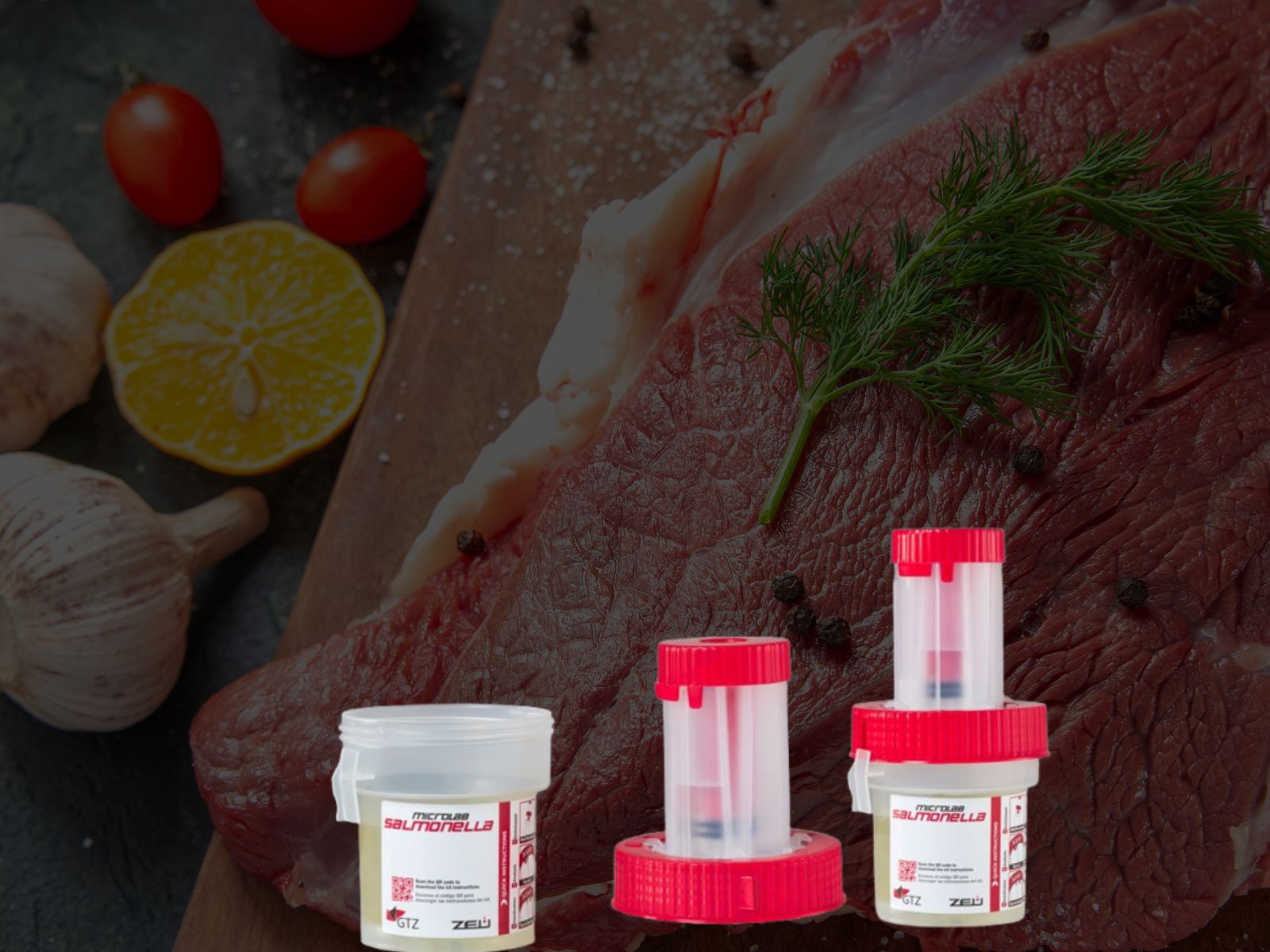
The Microlab ‘Salmonella’ Pathogen Test Kit has been developed with this mission in mind. By combining accuracy with simplicity, this innovative kit allows for the detection of Salmonella serogroups A–E in food samples and working surfaces — ensuring contamination risks are identified quickly and safely.
Why Salmonella testing matters
A major public health challenge
In Australia, Salmonella is one of the most frequently notified bacterial pathogens, with outbreaks often linked to eggs, poultry, meat, dairy products, and fresh produce.
A 2022 study from OzFoodNet highlighted Salmonella as the leading cause of hospitalisations from foodborne illness in Australia.
For food producers, even a single contamination incident can lead to product recalls, financial losses, and reputational damage.
Regulatory requirements
Food safety agencies, including Food Standards Australia New Zealand (FSANZ), set strict requirements for monitoring Salmonella in ready-to-eat foods, raw materials, and production environments. Compliance requires regular screening, making fast and reliable testing tools essential for industry operations.
What makes the Microlab Salmonella Test unique?
The Microlab ‘Salmonella’ kit stands out because it integrates all steps of analysis into a single disposable device, making the process both easy and 100% safe for users. Unlike traditional culture methods, which often require trained microbiologists, sterile workspaces, and multiple handling steps, Microlab simplifies testing for in-house use.
Key features:
Test principle: Immunochemical lateral flow assay (LFIA) tailored for Salmonella serogroups A–E.
Scope: Specific detection of the most clinically and industrially relevant Salmonella types.
Limit of detection: Absence in 25 g of food sample or 100 cm² of surface area.
Assay time: Approximately 24 hours at 37 °C, significantly faster than standard culture confirmation tests that may take 3–5 days.
Results: Clear, visual interpretation, avoiding the need for specialist equipment.
How does it work?
Microlab brings together three essential stages of analysis in one closed device:
Sample incubation – The food or surface sample is introduced into the culture medium within the device and incubated.
Immunochromatographic assay – A lateral flow strip coated with antibodies detects the presence of Salmonella antigens from serogroups A–E.
Inactivation – After the test, the sample and culture medium are automatically inactivated, ensuring 100% biosafety during disposal.
This integrated workflow minimises cross-contamination risk and makes the entire testing process safe for operators, even in non-specialised facilities.
Advantages for food producers
Ease of use
No microbiological training required — the kit is designed for in-house teams to conduct testing quickly and reliably.
Time efficiency
With results available in 24 hours, Microlab reduces the waiting time compared to conventional culture methods (which typically require 3–7 days for full confirmation).
Safety
The closed system ensures pathogens are inactivated post-assay, protecting staff and eliminating biosafety hazards.
Accuracy and relevance
Targeting serogroups A–E, which are responsible for the majority of Salmonella-related outbreaks worldwide, the kit provides relevant, actionable results.
Flexibility
Suitable for both food samples and surface testing, it helps ensure compliance not just in end products, but also across production lines and equipment.
Where can the Microlab Salmonella Test be applied?
Meat and poultry processors: To monitor raw materials and finished products.
Dairy producers: To test milk products and prevent contamination during processing.
Egg industry: A known high-risk area for Salmonella contamination.
Fresh produce: For testing leafy greens, sprouts, and other raw products linked to outbreaks.
Food production facilities: Routine swabbing of working surfaces, equipment, and packaging lines to detect contamination hotspots.
By enabling testing both on products and in the environment, Microlab supports a comprehensive HACCP (Hazard Analysis Critical Control Point) approach.
Comparison with traditional methods
| Aspect |
Microlab Salmonella Kit |
Traditional Culture Methods |
| Assay time |
24 hours |
3–7 days |
| Ease of use |
Plug-and-play, no training |
Requires microbiology expertise |
| Safety |
Closed, inactivates sample |
Live culture handling |
| Result interpretation |
Visual |
Requires lab confirmation |
| Scope |
Salmonella A–E serogroups |
Broad (species-specific with further typing) |
Microlab is not designed to replace laboratory confirmation tests but acts as a powerful screening tool that helps food producers detect contamination early, reduce losses, and make rapid decisions.
The bigger picture: protecting brands and consumers
For Australian food producers, a single contamination event can have widespread consequences:
Product recalls can cost companies millions of dollars.
Export restrictions may be imposed if Salmonella is detected in shipments.
Consumer trust, once lost, is difficult to rebuild.
By adopting rapid screening solutions like Microlab, food businesses gain a competitive edge in risk management, compliance, and consumer protection.
The Vendart’s Microlab ‘Salmonella’ Pathogen Test Kit provides a safe, simple, and effective way to detect Salmonella in food products and production environments. By combining immunochemical accuracy with user-friendly design, it enables producers to identify contamination risks quickly, minimise losses, and maintain compliance with food safety regulations.
For Further Enquiry Contact: sales@vendart.com.au