In today’s food manufacturing environment, maintaining stringent allergen controls is no longer a competitive advantage — it is an operational necessity. With rising rates of food allergies, stricter FSANZ standards, and growing consumer scrutiny, Australian food producers must ensure that their sanitation procedures effectively remove allergenic residues before switching between production runs.
Yet the biggest challenge remains the gap between cleaning and verification. Traditional laboratory-based analysis methods, such as ELISA, PCR, or mass spectrometry, while accurate, require equipment, trained personnel, and hours to deliver results. This slows down decision-making and increases the risk of cross-contact, line delays, and potentially expensive recalls.
Lab2GO solves this challenge with speed, portability, and simplicity.
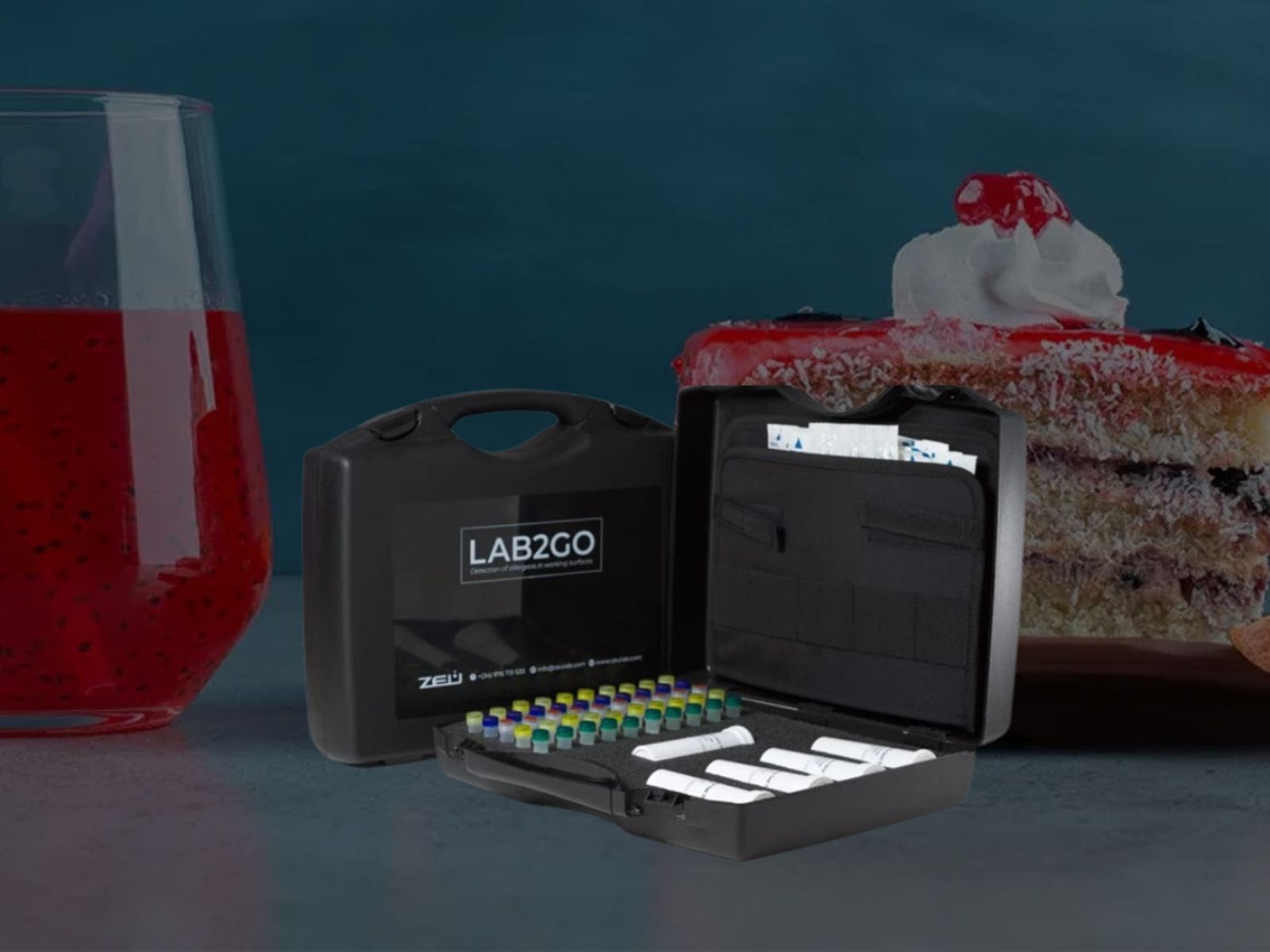
Designed as a compact, fully portable allergen testing briefcase, Lab2GO enables any trained operator to verify cleaning effectiveness in just 10 minutes — without specialised instruments. By combining multiple Proteon Express immunochromatographic tests, Lab2GO gives food safety teams complete flexibility to run allergen analyses anywhere on the factory floor.
Whether you’re validating changeovers, checking high-risk equipment, or conducting random environmental sweeps, Lab2GO offers fast, reliable data when you need it most.
Why Rapid Allergen Verification Matters More Than Ever
A data overview from FSANZ and global allergen surveillance bodies highlights why fast on-site verification is essential:
- Allergen-related recalls remain one of the top three causes of food recalls in Australia each year.
- The most commonly implicated allergens include milk, egg, gluten (wheat), soy, nuts, fish, and crustaceans.
- Most incidents are linked to cross-contact due to incomplete cleaning, especially in shared-line facilities.
- A delay of even 30–60 minutes in verification can cost thousands in production downtime.
Implementing rapid allergen testing like Lab2GO directly strengthens preventive controls under HACCP, BRCGS, SQF, and FSANZ Standard 3.2.2 guidelines.
What Is Lab2GO?
Lab2GO is a portable, ready-to-use allergen testing briefcase that includes:
- Multiple Proteon Express allergen test strips
- Swabs, buffers, extraction tubes
- Waste containers
- All consumables needed for field testing
Everything is organised in a compact, rugged case that can be personalised for individual plant needs. This setup allows QA teams, production supervisors, and sanitation staff to perform allergen analysis anywhere — without visiting a lab or waiting for external testing.
Key Benefits of Lab2GO for Modern Food Manufacturers
1. Test in 10 Minutes — No Equipment Required
Using rapid immunochromatographic strip technology, Lab2GO delivers results in 10 minutes, providing immediate feedback on:
- Effectiveness of line cleaning
- Potential cross-contact risks
- Readiness for the next batch production
- Verification of allergen-free zones
This quick turnaround is invaluable for plants running short production cycles or frequent product changeovers.
2. Portable, Customisable, and Always Ready
Since all items come pre-packed in a single briefcase:
- No laboratory space is required
- Operators can test anywhere — on the production line, warehouse, or high-risk areas
- You can customise the allergen panels based on the facility’s risk assessment
This portability supports multi-site manufacturers, contract packers, and audits that demand on-the-spot verification.
3. Highly Sensitive Detection Across Major Food Allergens
The Proteon Express tests included in Lab2GO are designed to detect extremely low traces of allergenic proteins. Sensitivity is aligned with international allergen control benchmarks:
| Allergen |
Detection Limit |
| Milk (β-lactoglobulin, Casein) |
0.7 μg |
| Egg |
0.25 μg |
| Gluten (gliadin equivalent) |
1 μg |
| Soy |
0.7 μg |
| Fish (tropomyosin) |
0.25 μg |
| Crustaceans |
4 μg |
| Almond |
0.9 μg |
| Hazelnut |
1 μg |
These low detection thresholds help manufacturers verify compliance with both FSANZ and Codex guidelines for allergen traces.
4. Strengthens Allergen Management Systems
Using Lab2GO as part of your environmental monitoring and sanitation verification strategy helps you:
- Detect cleaning failures instantly
- Identify contamination hotspots earlier
- Reduce batch hold times
- Prevent cross-contact incidents
- Lower recall risk
- Provide documentation for audits and certification programs
With rapid results, you can make confident, timely decisions that protect food safety and maintain operational continuity.
How Lab2GO Works: The Test Principle
Lab2GO uses immunochromatographic assay technology, commonly known as lateral flow test strips. This technique employs specific antibodies that bind to target allergenic proteins.
Step 1 — Collect the Sample
Depending on the testing type:
- Swab production surfaces, equipment, or utensils
- Extract food samples in the supplied buffer
Step 2 — Prepare the Sample
Insert the swab into the extraction buffer or mix the food material as per the guidelines.
Step 3 — Add to Test Strip
Place drops of the extracted sample onto the designated sample window of the test cassette.
Step 4 — 10-Minute Reaction
If allergenic proteins are present, antibody–antigen binding produces a visible test line.
Step 5 — Interpret Results
- Two lines: Allergen detected
- One line: Negative (no detectable allergen)
The tests require no reader, no calibration, and no specialised training.
Where Lab2GO Fits in Your Food Safety Program
Lab2GO is ideal for facilities such as:
- RTE and meal manufacturers
- Dairy, bakery, and confectionery plants
- Seafood processors
- Cereal, snack, and flour mills
- Contract manufacturers with multi-allergen portfolios
- Food packaging industries
- Catering operations
- Retail QA teams
Its versatility makes it powerful for daily cleaning verification, pre-operational checks, and random allergen sweeps.
Final Thoughts
In an era where allergen management is central to food safety and brand protection, Lab2GO empowers teams with rapid, equipment-free allergen detection anywhere it’s needed. With sensitive detection across eight of the most common allergens, the briefcase enables real-time decisions that keep products safe, production lines optimised, and consumers protected.
For Further Enquiry Contact: sales@vendart.com.au